Cleaning concrete around a pool is different from cleaning other outdoor concrete surfaces. Pool deck concrete is exposed to chlorine splash, sunscreen residue, algae growth, and constant wet-dry cycles. Each of these leaves a different type of stain that needs a specific cleaning approach.
Using the wrong cleaner can etch the concrete surface, strip the sealer, or push chemicals into your pool water. Before you start, identify the stain types present on your deck. This saves time and prevents surface damage.
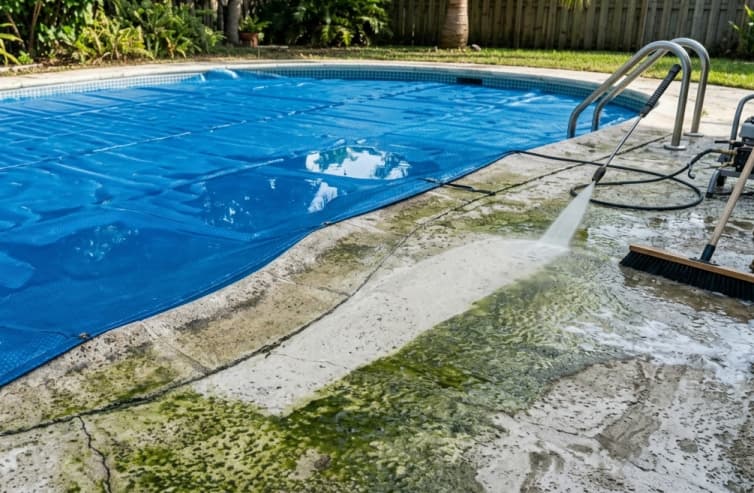
Pool deck concrete is typically brushed, stamped, or exposed aggregate. Each finish has slightly different cleaning needs. Exposed aggregate and stamped concrete need lower pressure settings to avoid surface damage during pressure washing.
What Causes Stains on Concrete Around a Pool?
Stains on pool deck concrete come from five main sources. Each stain type looks different and responds to different cleaners.
| Stain Type | Appearance | Common Cause |
|---|---|---|
| Algae and mold | Green, black, or grey patches | Moisture and shade |
| Efflorescence | White powdery deposits | Mineral salts rising through concrete |
| Rust stains | Orange or brown streaks | Metal furniture, pool fittings, or rebar |
| Oil and sunscreen | Dark greasy spots | Body oils and lotion from swimmers |
| Chemical stains | Faded or bleached patches | Chlorine tablet contact or pool water splash |
Knowing the stain type before you start saves time and prevents you from using the wrong product.
Algae needs an alkaline cleaner. Rust needs an acid-based remover. Oil needs a degreaser. Using the wrong product on the wrong stain makes the problem worse.
Tools and Materials You Need to Clean Pool Deck Concrete
Gather everything before you start. Stopping midway through a concrete cleaning job allows cleaners to dry unevenly and leave streaks.
Tools:
- Pressure washer (1,500 to 3,000 PSI with a 25-degree or 40-degree nozzle)
- Stiff bristle scrub brush or deck brush
- Garden hose with spray nozzle
- Wet/dry vacuum or squeegee
- Safety goggles and rubber gloves
- Plastic sheeting or tarp to protect nearby plants
Cleaning materials:
- pH-neutral concrete cleaner for general cleaning
- Sodium hypochlorite solution (diluted bleach) for algae and mold
- Oxalic acid-based cleaner for rust stains
- Alkaline degreaser for oil and sunscreen stains
- White vinegar solution for mild efflorescence
- Muriatic acid solution for heavy efflorescence (used with caution)
- Concrete sealer (optional, for post-cleaning protection)
Read Also: How to Choose Upper Ground Swimming Pool For Your Yard
How to Clean Concrete Around a Pool?
Cleaning pool deck concrete correctly takes between 2 and 5 hours depending on deck size and stain severity. Follow these steps in order for the best results.
Step 1: Clear the Pool Deck Completely
Remove all furniture, potted plants, pool toys, and accessories from the concrete surface. Move them well away from the cleaning area.
Cover your pool water with a pool cover or tarp if possible. This prevents cleaning chemicals from entering the water and affecting your pool chemistry. If you cannot cover the pool, close the circulation system temporarily during chemical application.
Remove loose debris such as leaves, dirt, and twigs with a broom or leaf blower before applying any liquid cleaner.
Step 2: Wet the Entire Concrete Surface
Rinse the entire pool deck with a garden hose before applying any cleaner. This pre-wet step serves two purposes.
First, it loosens surface dirt and makes scrubbing more effective. Second, it prevents cleaning solutions from absorbing too quickly into dry concrete, which causes uneven cleaning and streaking.
Pay extra attention to corners, expansion joints, and the area directly adjacent to the pool edge. These spots collect the most debris and algae growth.
Step 3: Apply the Right Cleaner for Each Stain Type
Apply cleaners to stained areas before doing a general wash. This allows the product time to break down the stain before pressure washing.
For algae, mold, and mildew: Mix one part sodium hypochlorite (household bleach) with four parts water.
Apply with a garden sprayer or stiff brush. Let it sit for 10 to 15 minutes before scrubbing.
Never apply undiluted bleach to pool deck concrete. It damages the surface and creates chlorine gas risk near pool water.
For rust stains: Apply an oxalic acid-based rust remover directly to the stain. Follow the manufacturer’s instructions for dwell time, typically 5 to 10 minutes.
Do not let it dry on the surface. Rinse thoroughly after treatment.
For oil and sunscreen stains: Apply an alkaline degreaser to the affected area. Work it into the concrete with a stiff brush in circular motions. Leave for 5 to 10 minutes before rinsing.
For efflorescence (white powdery deposits): For light efflorescence, scrub with a white vinegar and water solution (1:1 ratio).
For heavy deposits, use a diluted muriatic acid solution (1 part acid to 10 parts water).
Always add acid to water, never water to acid. Wear gloves and eye protection and rinse the surface thoroughly after application.
Step 4: Scrub the Concrete Surface by Hand
Use a stiff-bristle deck brush to scrub the entire concrete surface after applying cleaners. Work in sections of about 2 square meters at a time.
Scrub in overlapping circular strokes to lift dirt from the texture of the concrete surface. Pay close attention to expansion joints and grout lines where algae and dirt accumulate. These areas need extra scrubbing before pressure washing.
Do not let cleaning solution dry on the surface during this step. Work in sections and keep the surface damp with occasional water from the garden hose.
Step 5: Pressure Wash the Entire Pool Deck
Set your pressure washer to between 1,500 and 3,000 PSI for standard brushed concrete. Use a 25-degree nozzle for general cleaning and a 40-degree nozzle for stamped or exposed aggregate concrete to avoid surface damage.
Keep the nozzle 20 to 30 centimeters above the surface. Hold the wand at a slight angle rather than pointing straight down.
This pushes dirty water away from you rather than back onto already-clean areas.
Work in straight, overlapping passes from one end of the deck to the other. Do not make circular motions with the pressure washer wand.
Circular passes create visible swirl marks in the concrete that dry as permanent patterns.
Direct the spray away from the pool water at all times. Even diluted cleaning solution alters pool pH and chlorine levels if it enters the water in large amounts.
Step 6: Rinse the Concrete Thoroughly with Clean Water
Rinse the entire deck with a garden hose after pressure washing. This removes all cleaning solution residue from the surface.
Pay close attention to the area immediately around the pool edge. Any remaining cleaner here will wash into the pool with the next rain or swimmer entry. Rinse this zone twice to be sure.
Test your pool water chemistry within 24 hours of cleaning. Adjust pH, alkalinity, and chlorine levels as needed.
Even careful rinsing allows small amounts of cleaner to reach pool water.
Step 7: Allow the Concrete to Dry Fully Before Sealing
Let the clean concrete dry for a minimum of 24 hours before applying sealer. In humid conditions, wait 48 hours.
Sealing over damp concrete traps moisture inside and causes the sealer to peel within weeks.
Check that the surface is dry by taping a 30 cm square piece of plastic sheeting to the concrete. Seal the edges with tape and leave for one hour.
If condensation forms under the plastic, the concrete needs more drying time.
Step 8: Apply Concrete Sealer to Protect the Clean Surface
Apply a penetrating or topical concrete sealer once the deck is fully dry. This step is optional but strongly recommended for pool deck concrete.
Sealing protects against future algae growth, reduces moisture absorption, and makes the next cleaning job much faster.
A good quality sealer applied to clean concrete lasts 3 to 5 years with normal pool deck traffic.
Use a roller or sprayer to apply the sealer in thin, even coats. Apply two coats, waiting the time specified on the product label between applications. Keep foot traffic off the sealed surface for at least 24 hours.
How to Remove Green Algae from Pool Deck Concrete
Green algae on pool deck concrete is one of the most common problems homeowners face. It grows in any shaded or consistently damp area of the deck. It makes the surface slippery and stains the concrete if left untreated.
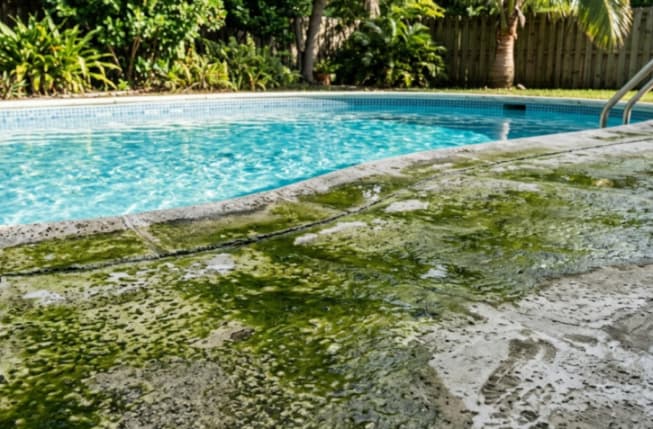
To remove green algae from pool deck concrete, apply a diluted sodium hypochlorite solution (1 part bleach to 4 parts water) to the affected area.
Let it dwell for 15 minutes. Scrub with a stiff brush and then pressure wash at 2,000 PSI.
For large areas with heavy algae growth, use a dedicated concrete algae remover product rather than bleach.
These products contain quaternary ammonium compounds that kill algae at the root level and provide a residual protective effect after rinsing.
After cleaning, improve drainage and reduce shade where possible. Algae cannot establish on concrete that dries fully between uses.
How to Clean Stamped Concrete Around a Pool Without Damage
Stamped concrete around a pool needs gentler treatment than standard brushed concrete. The textured surface and sealer coat are more sensitive to high pressure and acid-based cleaners.
Use a pressure washer set to no more than 1,500 PSI with a 40-degree wide-angle nozzle. Keep the nozzle at least 30 centimeters from the surface. Higher pressure lifts the sealer and damages the stamped pattern edges.
Use a pH-neutral concrete cleaner rather than bleach-based or acid-based products on sealed stamped concrete. Acidic and alkaline cleaners break down the sealer coat and leave the concrete vulnerable to staining.
After cleaning, reseal stamped concrete every 2 to 3 years. Stamped concrete loses its sealer faster than plain concrete because the textured surface has more exposed area per square meter.
How Often Should You Clean Concrete Around a Pool
| Cleaning Frequency | What to Do |
|---|---|
| Weekly | Sweep or blow off loose debris, leaves, and dirt |
| Monthly | Rinse with garden hose and spot-treat any new stains immediately |
| Every 3 to 6 months | Full scrub and pressure wash of the entire deck |
| Every 2 to 3 years | Deep clean followed by resealing the concrete surface |
Cleaning pool deck concrete every 3 to 6 months prevents stains from becoming permanent. Algae and efflorescence that sit on concrete for more than 6 months begin to penetrate the surface and become much harder to remove.
Spot-treat new stains within 48 hours of noticing them. Fresh stains sit on top of the concrete surface.
Stains older than a week begin to set into the pores of the concrete and require more aggressive treatment.