Key Takeaways
- Prefab is the umbrella term. Modular, manufactured, panelized, and kit homes are all types of prefab construction.
- Modular homes follow local building codes and use permanent foundations, which makes financing and resale easier.
- Manufactured homes follow the federal HUD code and often cost less, but they may depreciate like a vehicle.
- Always check local zoning rules and compare loan types before choosing a prefab construction method.
What is a Prefab Home?
A prefab home is any house built mostly in a factory, then shipped to its final location. The word prefab is short for prefabricated. It is an umbrella term, not a specific building type.
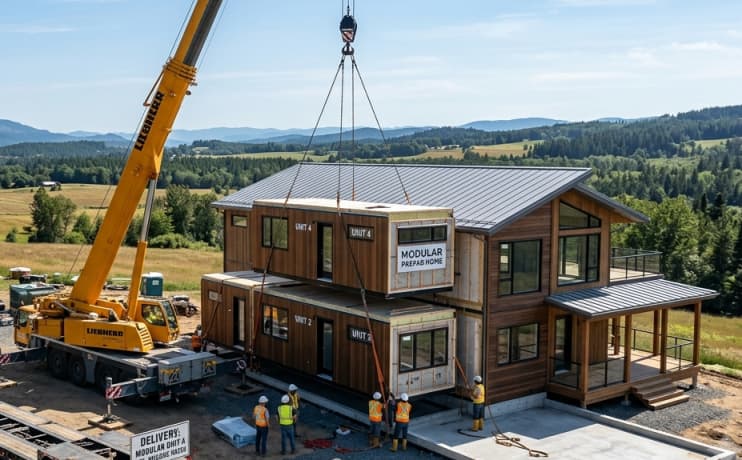
Prefab covers several construction methods. These include modular homes, manufactured homes, panelized homes, and kit homes. Each method uses different materials, codes, and assembly steps.
People often use prefab and modular as if they mean the same thing. They do not. Every modular home is a prefab home, but not every prefab home is modular.
What is a Modular Home?
A modular home is a house built in large sections, called modules, inside a factory. These modules are then trucked to the home site and joined together on a permanent foundation.
Modular homes follow the same state and local building codes as houses built entirely on site. This is the main legal difference between modular and other prefab types.
Once assembled, a modular home looks and functions like a normal house. Most lenders, appraisers, and insurers treat it the same way they treat a site built home.
Modular Homes vs Prefab Homes: Key Differences
The table below shows how modular homes compare to other common prefab types.
| Feature | Modular Home | Manufactured Home | Panelized Home | Kit Home |
|---|---|---|---|---|
| Building code followed | Local and state codes | Federal HUD code | Local and state codes | Local and state codes |
| Foundation type | Permanent foundation | Steel chassis, may stay on wheels | Permanent foundation | Permanent foundation |
| Where it is built | Factory, shipped in sections | Factory, shipped as one or two units | Factory builds wall and roof panels | Factory cuts and packages parts |
| On site assembly time | A few days to a few weeks | A few days | A few weeks | Several weeks to months |
| Mortgage approval | Same as site built homes | Often needs chattel or special loans | Same as site built homes | Same as site built homes |
| Typical resale value | Similar to site built homes | Often lower, depreciates like a vehicle | Similar to site built homes | Similar to site built homes |
This table shows why the word prefab alone does not tell a buyer much. The code, the foundation, and the loan options change a lot depending on the type.
How Modular Construction Works Step by Step
Modular construction follows a clear sequence. Knowing these steps helps buyers plan their timeline.
Step 1: Design and permitting. The buyer chooses a floor plan or works with a designer. The builder submits plans to the local building department for approval, just like for any new house.
Step 2: Factory construction. Workers build each module indoors. This includes framing, wiring, plumbing, insulation, drywall, and sometimes flooring and cabinets.
Step 3: Site preparation. While the modules are built, a crew prepares the home site. This includes pouring the foundation and connecting utilities.
Step 4: Transport and placement. Finished modules are loaded onto trucks and driven to the site. A crane lifts each module onto the foundation.
Step 5: Final assembly and finishing. Crews join the modules together, seal the seams, and finish exterior siding and roofing. They also connect plumbing and electrical systems between modules.
Step 6: Inspection. A local inspector checks the finished home, the same way they would inspect a site built house.
Read Also: What Does a Realtor Do During a Home Inspection?
Cost Comparison: Modular vs Other Prefab Homes
Cost is one of the biggest reasons buyers compare modular and prefab options.
Modular homes typically cost between 100 and 200 dollars per square foot, including the foundation and site work. A 1,800 square foot modular home could cost between 180,000 and 360,000 dollars before land costs.
Manufactured homes cost less per square foot, often between 50 and 100 dollars. The lower cost comes from lighter materials and the federal HUD code, which differs from local codes.
Panelized and kit homes fall in a wide range. Costs depend heavily on how much work the buyer or local crew finishes on site. Labor costs in the local area can change the final price by a large amount.
Pros and Cons of Modular Homes
Advantages
- Faster build time than fully site built homes, often saving several weeks or months.
- Factory conditions reduce weather delays and material waste.
- Quality control is consistent because the same crew builds each module indoors.
- Easier to get a standard mortgage, since the home meets local building codes.
Disadvantages
- Transport costs can be high if the factory is far from the building site.
- Design changes after the modules are built are difficult and expensive.
- Some areas have zoning rules that limit modular construction, so buyers should check local rules first.
Which Is Better: Modular or Prefab Homes?
Neither option is better in every case. Modular homes are the better choice for buyers who want a permanent residence that matches a site built home in code compliance, financing, and resale value.
Other prefab types, such as manufactured or kit homes, are better for buyers who care more about a lower starting price or full control over the build.
If long term value and a normal mortgage matter most, modular is usually the stronger pick. It sits on a permanent foundation, follows local building codes, and tends to hold its value the same way a site built house does.
If budget or speed matters most, a manufactured home can be the better fit. It costs less per square foot and arrives nearly complete, though buyers should plan for a chattel loan and weigh the risk of depreciation.
If hands on control matters most, panelized and kit homes give buyers the most say over finishes and layout. They take more site labor and more time, so they suit buyers who already have a crew lined up or want to do some of the work themselves.