Remodeling a house with no money means using free labor, free or salvaged materials, and small targeted purchases instead of a full renovation budget. It relies on cleaning, reorganizing, painting, and minor repairs rather than gutting rooms or hiring contractors.
This approach works because most of what makes a house feel dated or run down is not structural. It is clutter, dirty surfaces, chipped paint, and outdated hardware. Fixing those problems costs little beyond your own time.
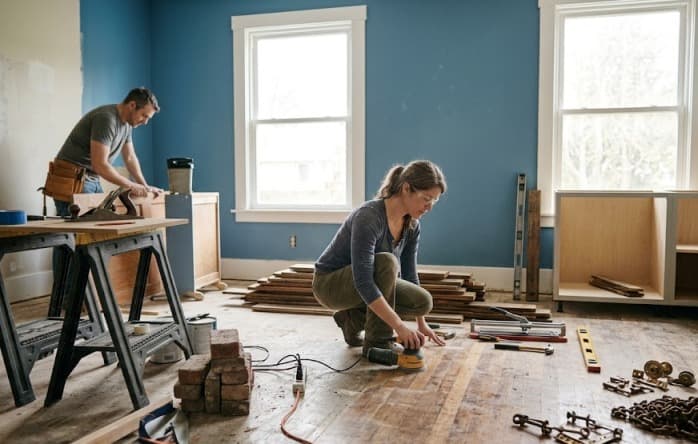
A true zero dollar remodel is rare. Most projects on this list cost somewhere between $0 and $150 per room. The goal is to get remodel level results from a fraction of a normal renovation budget.
How to Plan a No Money Remodel?
Planning matters more when your budget is small, because there is no room for wasted materials or repeated trips to the store.
Step 1: Walk Through Every Room and Make a List
Write down what actually bothers you about each room. Separate cosmetic problems, like scuffed walls or old light switch covers, from functional problems, like a leaking faucet. Cosmetic fixes are almost always free or cheap.
Step 2: Sort Problems by Cost, Not by Room
Group your list into three categories: free fixes (cleaning, decluttering, rearranging), near free fixes (paint, caulk, hardware swaps under $30), and fixes that need saved cash (flooring, appliances, structural repair).
Tackle the first two categories first.
Step 3: Set a Real Number, Even If It is Small
Even a $50 or $100 total budget changes how you shop. Knowing your number before you start stops impulse purchases at the hardware store.
Step 4: Time Your Purchases Around Sales
Home improvement stores mark down paint, tile, and hardware seasonally, often around holiday weekends.
Waiting two or three weeks for a sale can cut your material cost by 20 percent or more.
Read Also: Modular Homes vs Prefab Homes: Which is Better for You?
Free and Almost Free Ways to Remodel Every Room
Declutter Before You Do Anything Else
A decluttered room looks bigger, cleaner, and more finished, and it costs nothing.
Remove anything you have not used in a year, donate or sell what you can, and store the rest out of sight.
Real estate agents consistently rank decluttering among the highest impact, lowest cost changes a homeowner can make before a sale or a remodel.
Deep Clean Surfaces You Normally Skip
Baseboards, light fixtures, ceiling fans, and window tracks collect years of dust that make a whole room look tired.
A thorough clean with basic supplies you already own can visibly brighten a space in an afternoon.
Rearrange Furniture for a New Layout
Moving furniture away from walls, creating conversation areas, and opening up walkways changes how a room feels without buying anything.
This works especially well in living rooms and bedrooms.
Paint One Wall or One Room
Paint is the highest value dollar you can spend on a remodel. A gallon of mid grade interior latex paint runs $20 to $60 and covers 350 to 400 square feet in one coat.
One gallon is usually enough for a small bathroom, hallway, or accent wall.
Swap Cabinet and Door Hardware
New knobs, pulls, and hinges run a few dollars each and take an evening to install with a screwdriver.
This single change modernizes kitchen cabinets and bathroom vanities faster than almost any other project.
Clean or Regrout Tile Instead of Replacing It
Discolored grout is one of the biggest reasons a bathroom or kitchen looks old.
A grout brush, baking soda, and vinegar restore most grout lines for free. Full regrouting with a small tub of grout costs under $20 and fixes what cleaning cannot.
Reface Instead of Replace
Cabinet doors can be sanded and repainted rather than torn out.
Countertops can be resurfaced with peel and stick laminate sheets or paint kits designed for countertops, both of which cost far less than replacement.
Where to Find Free or Cheap Materials
| Source | What You Can Find | Typical Cost |
|---|---|---|
| Habitat for Humanity ReStore | Cabinets, doors, tile, light fixtures, appliances | Free to 70 percent off retail |
| Local Buy Nothing groups and Facebook Marketplace | Leftover paint, lumber, furniture, fixtures | Free to very low cost |
| Hardware store clearance and oops paint sections | Mismatched or returned paint, discontinued tile | 50 to 90 percent off |
| Curbside and estate sale finds | Furniture, doors, hardware, trim | Free to a few dollars |
| Neighbors mid renovation | Leftover tile, flooring, or cabinets from their own project | Usually free |
Always inspect used materials for damage, mold, or safety issues, especially with electrical fixtures and anything that touches food preparation surfaces, before bringing them into your home.
Government and Nonprofit Programs That Cover Real Repairs
Cosmetic fixes handle most of what makes a house feel outdated, but some repairs, like a failing roof or unsafe wiring, need real funding.
Several programs exist specifically for homeowners who cannot cover these costs themselves.
The USDA Section 504 Home Repair program provides loans to very low income homeowners and grants to homeowners 62 and older to remove health and safety hazards, with combined loan and grant assistance up to $50,000 and a lifetime grant limit of $10,000.
HUD funded programs, including the HOME Investment Partnerships Program, route money through local governments for housing rehabilitation, with grant amounts commonly ranging from $5,000 to $25,000 depending on the project and location. Because these programs are administered locally, contact your city or county housing department directly to check availability.
The Weatherization Assistance Program helps eligible households pay for insulation, air sealing, and heating system repairs at no cost, which lowers monthly utility bills as a side benefit.
Numbered Plan: A 30 Day No Money Remodel
- Week one: Declutter and deep clean every room on your list.
- Week one: Rearrange furniture in your living areas and bedrooms.
- Week two: Repair small drywall dings with a patch kit and repaint one high impact wall or room.
- Week two: Regrout or deep clean bathroom and kitchen tile.
- Week three: Swap cabinet and door hardware throughout the house.
- Week three: Source free or discounted materials from ReStore or local listings for your next project.
- Week four: Tackle one reface project, such as painted cabinet doors or a resurfaced countertop.
- Week four: Research and apply to one relevant grant or assistance program if you have a repair beyond cosmetic scope.
Final Thoughts
Remodeling with no money is not about doing less. It is about being resourceful. A deep clean, a fresh coat of free paint, some rearranged furniture, and a few small repairs can transform how a house feels without costing a thing.
The key is patience. These changes may take longer than hiring a contractor, but the results can feel just as rewarding, and your wallet will thank you.