Key Takeaways
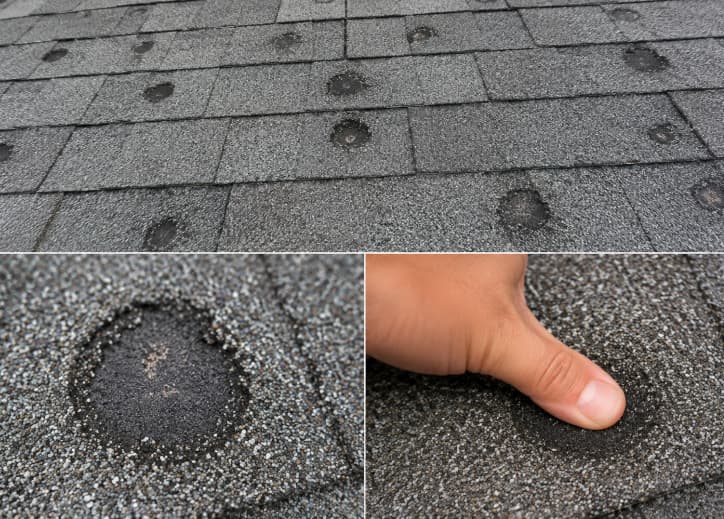
- Hail damage on asphalt shingles appears as dark, circular dents with a soft, bruised center — similar to a thumb-print pressed into the surface.
- Impact size matters: hailstones 1 inch (quarter-sized) or larger are generally large enough to cause functional shingle damage.
- Damage is not always visible from the ground; a close-up inspection from the roof or by a licensed inspector is needed for accurate assessment.
- Filing a homeowner’s insurance claim for hail damage typically has a strict window of 12 months from the storm date in most U.S. states.
- Not all dents are hail damage: foot traffic, falling branches, and manufacturing defects can look similar and are not covered by storm claims.
What Hail Damage on a Roof Actually Looks Like
Hail damage on a roof shows up as dark, circular impact marks on asphalt shingles where the granules, the small protective coating on the surface have been knocked loose. The exposed area underneath looks lighter or black, and the shingle feels soft when pressed, like a bruise on an apple.
The damage pattern is random. The dents seem dispersed throughout the roof rather than concentrated in one area because hail falls at angles based on the direction of the wind. This random pattern is one of the clearest signs that the damage is storm-related rather than from foot traffic or falling debris.
Hailstone size directly determines how much damage occurs. A 1-inch hailstone (about the size of a quarter) hits a roof with roughly 5 foot-pounds of force. At that force, asphalt shingles begin to lose granules and the mat underneath starts to crack.
How to Identify Hail Damage by Roofing Material
Different roofing materials show hail damage in different ways. By being aware of what to look for on your particular type of roof, you can avoid misinterpreting typical wear as storm damage or completely overlooking actual damage.
Asphalt Shingles
Asphalt shingles are the most common residential roofing material in the U.S. and the easiest to assess for hail damage.
Look for:
- Black or dark circular marks where granules are missing. The exposed fiberglass mat underneath is darker than the surrounding shingle.
- Soft spots that feel spongy or depressed when pressed. A healthy shingle feels firm.
- Cracked or fractured edges on shingles in the impact zone.
- Granule accumulation in gutters. After a hailstorm, gutters often fill with the small, sand-like granules knocked off shingles. After a single storm, a substantial deposit is a reliable marker of serious damage.
New shingles show hail marks more clearly. Older shingles that are already weathered and granule-depleted may show damage that is harder to distinguish from general aging.
Metal Roofs
Hail damage to metal roofs appears as tiny, shallow dents on the surface panels, which are sometimes referred to as dimples.
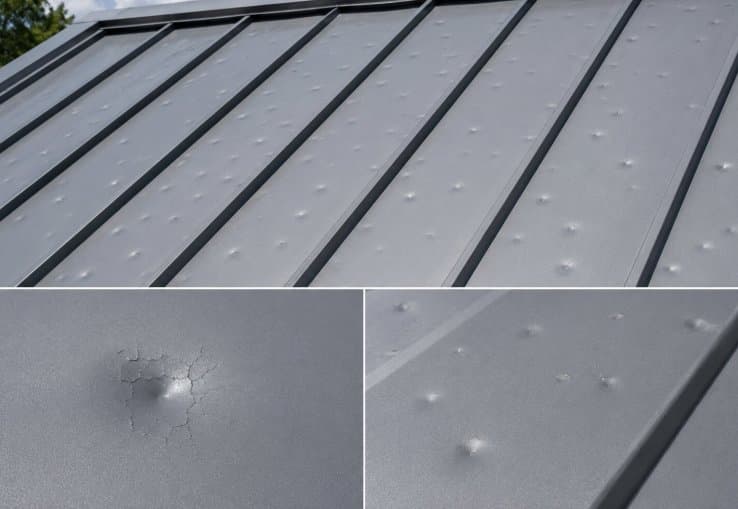
The paint or coating around each dent may crack or flake. Unlike asphalt shingles, metal roofs rarely fail structurally from hail unless the storm produced very large stones (2 inches or more), but the cosmetic damage is usually visible and documentable for insurance purposes.
Check ridge caps and flashing first. These thinner metal parts are excellent early warning signs of storm impact since they are more prone to denting than the major panels.
Wood Shingles and Shakes
Wood shingles split or crack on impact. Hail damage on wood shows as:
- Fresh splits with sharp, clean edges and orange or raw wood visible inside the crack.
- A random pattern of splits across the roof surface.
- Impact marks on the soft grain of the wood where the hailstone hit.
Old splits caused by natural weathering have a different appearance; they are gray throughout and don’t show any exposed raw wood. The age of the split is one of the main things an adjuster will assess when evaluating a claim.
Tile Roofs (Clay and Concrete)
Tile is brittle. Hailstones large enough to damage tile will crack or chip it. Look for:
- Visible cracks or missing chunks on individual tiles.
- Shattered tiles where the impact was direct and the stone was large.
- Cracked ridge caps; these are often the first to break because they sit exposed at the peak.
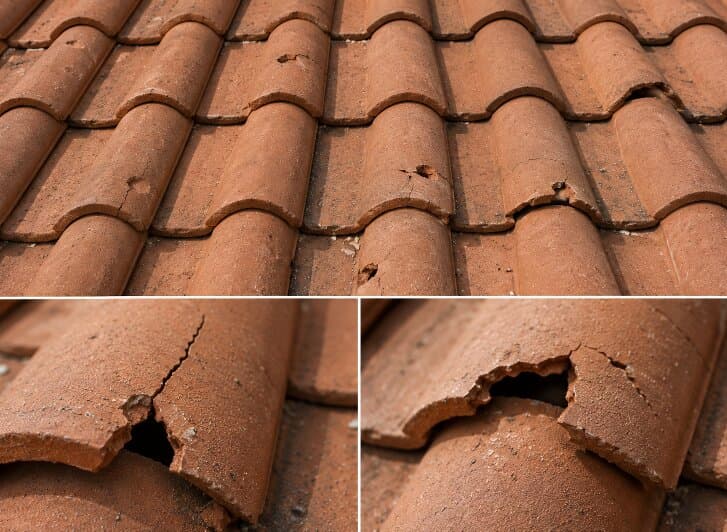
Smaller hailstones (under 1.5 inches) often leave no visible damage on tile because of how rigid the material is. If tiles appear intact but you suspect a storm caused damage, have the underlayment checked. Cracked tiles allow water through, and the damage is then to the layer beneath rather than the tile itself.
Where to Look First: High-Priority Areas on Any Roof
Some parts of a roof show hail damage earlier and more clearly than others. Starting here makes any inspection faster and more accurate.
| Area | Why It Shows Damage First |
|---|---|
| Gutters and downspouts | Soft metal dents easily; granule deposits confirm shingle damage |
| Ridge caps | Exposed on all sides; take hits from multiple wind directions |
| Roof vents and pipe boots | Soft lead or aluminum shows dents clearly |
| Skylights (frame, not glass) | Aluminum frames dent on impact |
| AC unit housing | Sheet metal dimples are easy to photograph for insurance |
| Painted wood trim and fascia | Soft wood shows circular impact marks |
These are called “test items” by insurance adjusters. If the gutters and vents show clear hail marks from the same storm, it supports the case that the shingles were damaged at the same time.
What Hail Damage is NOT: Common Look-Alikes
Not every mark on a shingle is storm damage. Four things regularly get misidentified as hail damage, and insurance adjusters are trained to spot the difference.
Foot traffic damage leaves irregular scuff marks and granule loss in a concentrated path; typically in a straight line from where a ladder was placed. Hail damage is scattered and random.
Manufacturing blisters are bubbles in the asphalt that pop over time, leaving circular depressions that look like hail marks. The difference: blisters are dry and crumbly at the center, while hail impacts are smooth and have a compressed, mat-exposed center.
Normal granule loss from aging happens evenly across an old shingle. Hail damage is spotty and concentrated in the impact area, with sharp boundaries between damaged and undamaged areas.
Tree debris and branch impacts leave elongated scratches or larger irregular dents rather than the small, circular marks hailstones create.
How to Inspect Your Roof for Hail Damage Safely
A ground-level inspection can identify obvious damage but will miss most of what matters. Here is how to do a complete inspection without unnecessary risk.
Step 1: Start from the ground. Use binoculars to scan the roof surface after any storm. Look for dark circular patches, missing sections of shingles, and exposed lighter-colored areas. Check gutters and downspouts from the ground for visible dents.
Step 2: Check soft metals at ground level. Walk around the property and inspect the AC condenser housing, mailbox top, aluminum window sills, and painted wood trim. Dents on these surfaces from the same storm confirm hail was large enough to cause damage.
Step 3: Inspect the gutters up close. Use a ladder to look inside gutters. A significant deposit of granules after one storm is a strong signal that the roof surface was hit hard enough to strip shingle coating.
Step 4: Get on the roof only if it is safe to do so. Walk the ridge line and look at ridge caps first. Then check the field of the roof in sections, pressing down on any dark marks to feel for the soft, bruised texture of a genuine impact.
Step 5: Call a licensed roofing contractor. For insurance claims, an independent inspector or licensed roofer who will provide a written report is worth the cost. Adjusters work for the insurance company; a roofer’s report gives you documentation to negotiate with.
How Insurance Adjusters Assess Hail Damage
Insurance adjusters use a standardized process to determine whether hail damage is claimable. Knowing what they look for helps you present a stronger claim.
Adjusters count impact marks within a test square; typically a 10×10-foot section of roof. Most insurance companies require a minimum of 8 to 10 functional impacts per square to approve a full replacement claim.
“Functional” damage is defined as damage that shortens the life of the shingle or allows water intrusion, as opposed to cosmetic dents that don’t affect performance.
They will also check the date of the storm against weather data from the National Weather Service to confirm that hail occurred at the property’s location on the claimed date. Storm reports are publicly available and adjusters pull them routinely.
Documentation you should have ready before the adjuster arrives:
- The specific storm date and local weather report confirming hail.
- Photos of all impact marks on soft metals and shingles, taken the same day as the storm if possible.
- A written inspection report from an independent roofer.
- Your policy’s hail damage clause, including the “cosmetic damage” exclusion if your policy includes one.
What Happens If Hail Damage Goes Unrepaired
Leaving hail-damaged shingles in place accelerates roof failure in three specific ways.
First, exposed fiberglass mat absorbs UV radiation directly once granules are gone. Granules are the primary UV shield for asphalt shingles. Without them, the asphalt underneath dries out and cracks within 2 to 5 years, depending on climate.
Second, cracked or soft shingles lose their water-shedding ability. Water pools slightly at impact craters and works its way under the shingle edge over time, leading to rot in the decking below.
Third, the insurance claim window closes. Most U.S. homeowner policies allow 12 months from the storm date to file a hail damage claim. After that, the damage is treated as deferred maintenance which is not covered.
What to Do After You Identify Hail Damage
If you find clear signs of hail damage, take these steps in order to protect both your home and your insurance claim.
Document everything the same day. Photograph every impact mark, every dented gutter section, and every soft metal surface showing marks. To clearly see the magnitude of each depression, place a scale in the frame, such as a coin, ruler, or marker.
Report the storm date to your insurance company within the claim window, even before you have a full assessment. Opening a claim protects your right to proceed, but it does not require you to do so.
Get at least two written quotes from licensed roofing contractors before accepting the insurance company’s estimate. Adjusters can undervalue repairs, particularly on older roofs where depreciation is factored in.
Repair any active leaks with a temporary cover (roofing felt or a tarp) while the claim is being processed. You might not be compensated for water intrusion damage that happens after the storm and you did nothing to stop it.
Conclusion
Hail damage rarely looks serious from the ground, but the pattern of dark circular marks, soft shingle spots, and granule-filled gutters tells a clear story.
When a roof is struck directly by hail that is one inch or larger, it loses some of its UV protection and water-shedding capacity; the clock starts from there.
Document the damage the same day, open a claim before the 12-month window closes, and get an independent roofer’s report before accepting any adjuster estimate. Those three steps are the difference between a covered repair and an out-of-pocket roof replacement.