Key Takeaways
- Dark streaks on roof shingles are almost always algae (Gloeocapsa magma), not mold, dirt, or damage.
- Algae causes cosmetic staining first, then accelerates granule loss and heat absorption over several years if untreated.
- A diluted bleach-and-water solution, applied with low pressure and no scrubbing, removes algae effectively.
- Zinc or copper strips installed near the ridge are the most practical way to slow regrowth after cleaning.
- Do not pressure wash shingles: it strips granules, shortens shingle life, and voids most warranties.
What Causes Dark Streaks on Roof Shingles?
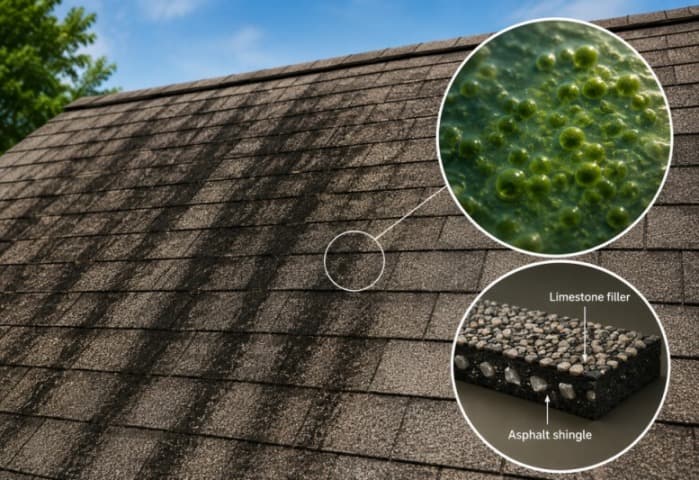
The dark streaks on your roof shingles are almost certainly algae; specifically Gloeocapsa magma, a blue-green algae that feeds on the limestone filler used in asphalt shingles.
It appears black or dark brown because the algae produces a dark pigmented outer sheath to protect itself from UV radiation. That sheath is what you see from the ground.
This type of algae thrives in humid climates and spreads easily. A single colony can cover a large portion of a roof within two to three years if left alone.
The algae arrives as airborne spores, typically carried by wind, birds, or squirrels moving between properties which is why neighbors in the same area often develop streaks around the same time.
What the streaks are not:
- They are not soot or pollution buildup
- They are not black mold (though mold can develop in severe, long-neglected cases)
- They are not a sign that your shingles are immediately failing
How to Tell if Your Streaks are Algae, Moss, or Lichen
The three most common roof discolorations look different and require different responses.
| Type | Appearance | Texture | Urgency |
|---|---|---|---|
| Algae (Gloeocapsa magma) | Black or dark brown streaks running downward | Flat, no raised surface | Low – cosmetic but monitor |
| Moss | Green, sometimes brownish-green patches | Raised, fuzzy, spongy | Medium – can lift shingles |
| Lichen | Gray-green crusty spots or patches | Hard, flat, attached firmly | High – damages shingle surface |
Algae runs in streaks because rainwater carries it down the slope. Moss and lichen tend to grow in patches, especially on north-facing sections where shade keeps the surface damp longer.
If you see raised green patches, that is moss. If you see hard, crusty gray-green spots that look bonded to the shingle surface, that is lichen. Both are harder to remove than algae and more likely to cause physical shingle damage over time.
Why Dark Streaks Appear on Some Roofs and Not Others
Algae growth follows moisture and shade. Roofs that stay damp longer after rain are more likely to develop streaks. Several factors increase that risk.
Shade from trees: Tree canopies block sunlight and slow drying. North-facing slopes also dry slower than south-facing ones, so streaks often appear there first.
Roof age: Older shingles have more surface wear, giving algae more texture to grip. Shingles installed before the early 2000s also contain more limestone filler, which algae feeds on directly.
Climate: Humid regions – particularly the southeastern United States, the Pacific Northwest, and coastal areas – see algae growth far more often than dry inland climates.
Nearby trees dropping debris: Leaves and organic matter on the roof retain moisture and add nutrients that feed algae colonies.
Does Algae Actually Damage Your Roof?
Algae alone does not eat through shingles the way lichen does, but it causes real problems over time. The dark pigment absorbs more heat than a clean shingle surface, which raises attic temperatures and increases cooling costs.
Retained moisture under algae colonies can also accelerate granule loss; the small mineral particles embedded in the surface of asphalt shingles that protect against UV degradation.
The practical takeaway: algae in its first year or two is mostly cosmetic. Algae left alone for five or more years is a maintenance problem worth taking seriously.
How to Clean Dark Algae Streaks Off Roof Shingles
Cleaning algae off shingles is a manageable DIY job for a single-story or safely accessible roof. The standard method uses a diluted bleach solution, which kills the algae at the root without stripping shingle granules – provided you do not use a pressure washer.
What you need:
- 1 part household bleach (sodium hypochlorite)
- 1 part water
- A garden sprayer or low-pressure hose attachment
- Non-slip footwear if going on the roof
- Plastic sheeting or buckets of water to protect plants below
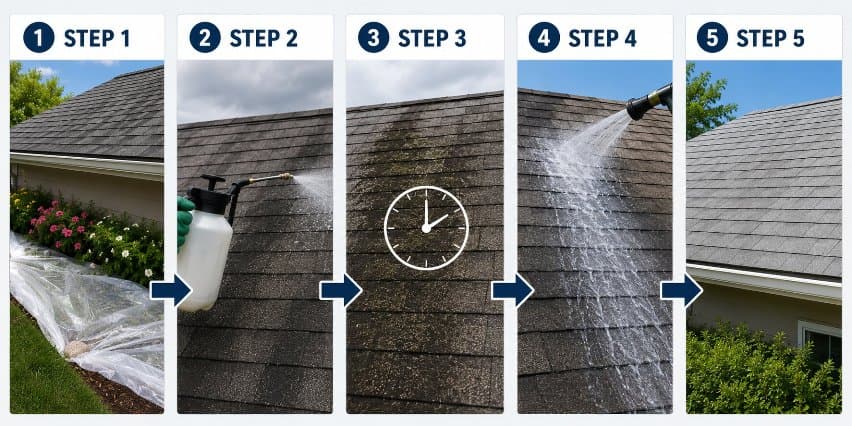
Step 1: Protect the area below the roof. Rinse your plants and shrubs with water before starting. Lay plastic sheeting over any flower beds directly below the work area. Bleach runoff will damage vegetation.
Step 2: Apply the bleach solution on a cloudy day. Spray the solution directly onto the streaked areas. A cloudy day slows evaporation, giving the solution more time to work. Do not scrub – this knocks off granules.
Step 3: Wait 15 to 20 minutes. Let the solution sit. The algae will begin to die. You do not need to scrub or rinse aggressively.
Step 4: Rinse gently from top to bottom. Use a standard garden hose with a gentle spray. Always rinse from the top of the slope downward. Do not use a pressure washer – the force strips granules and voids most shingle warranties.
Step 5: Expect gradual clearing. The roof will not look clean immediately. Rain over the following two to four weeks washes away the dead algae gradually. A single heavy rainstorm can clear significant discoloration.
How to Stop Dark Streaks from Coming Back?
Cleaning removes the algae, but it does not stop new spores from landing and starting over. Two passive methods slow regrowth without ongoing maintenance.
Zinc or copper strips near the ridge: Install a 6-inch strip of zinc or copper sheet metal just below the roof ridge. When it rains, trace amounts of metal ions wash down the slope, creating an environment that discourages algae growth. This is the most widely recommended passive prevention method.
Trim overhanging branches: Reducing shade increases how quickly the roof dries after rain. Less sustained moisture means fewer conditions for algae to establish. Cutting back branches that hang directly over the roof also reduces debris and organic material landing on the shingles.
Algae-resistant shingles for replacement: If your shingles are nearing the end of their lifespan anyway, algae-resistant shingles are worth considering for the next installation. These shingles include copper granules mixed into the surface, which create the same ion-release effect as the metal strips.
Conclusion
Dark streaks on roof shingles are usually caused by algae, not roof damage. Cleaning them early helps your roof stay in better condition and keeps it looking cleaner.
To prevent the stains from coming back, avoid pressure washing, trim overhanging branches, and consider installing zinc or copper strips for long-term protection.