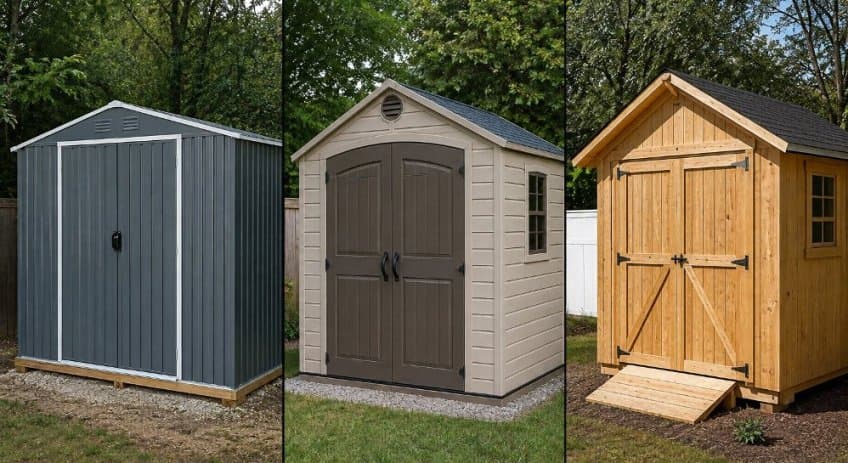
The three materials trade off differently on cost, durability, and upkeep. Metal wins on durability and price per year of use. Plastic wins on upfront price and zero maintenance. Wood wins on looks and flexibility, at the cost of ongoing care.
Choosing between them comes down to what you are storing, your climate, and how much yearly maintenance you are willing to do. A lawnmower and hand tools have very different needs than a workshop full of power equipment.
The sections below break down each material on the factors that actually matter: lifespan, cost, maintenance, weather resistance, and appearance.
How Long Does Each Shed Material Last?
Metal sheds typically last the longest, often reaching 20 to 30 years or more when properly built and coated.
Wood sheds can last 15 to 30 years with regular sealing and pest control. Plastic sheds generally last 10 to 15 years, since UV exposure and heat gradually make the panels brittle.
Lifespan depends heavily on quality and climate as well as material. A cheap metal panel without a rust resistant coating can fail faster than a well built plastic shed. A wood shed that gets sealed every year can easily outlast a neglected metal one.
Explore This: Different Types of Ceilings You Might Come Across
How Much Does Each Type of Shed Cost?
Plastic sheds cost the least to buy, usually between $300 and $800 for a small to medium size unit.
Metal sheds are often the cheapest prebuilt option overall and stay competitive even at larger sizes. Wood sheds cost the most upfront and carry ongoing costs for stain, sealant, and repairs.
The average price across all shed types lands around $2,500, but that number swings widely based on size, brand, and any custom features like windows, shelving, or a wider door.
Sticker price only tells part of the story. A plastic shed that needs replacing in 12 years can end up costing more per year of use than a metal shed built to last 25 years. When you compare prices, divide the total cost by the expected lifespan to get a fair yearly cost.
Which Shed Material Needs the Least Maintenance?
Plastic sheds need the least maintenance of the three, typically just an occasional wash down.
Metal sheds are also low maintenance but benefit from an annual inspection for rust spots, especially around seams and screws. Wood sheds need the most upkeep, including yearly staining or sealing to prevent rot and pest damage.
If you travel often or simply do not want a seasonal outdoor chore, plastic is the easiest option to live with. If you enjoy maintaining your property and want a shed that matches a wood deck or fence, the extra work on a wood shed may be worth it.
How Well Does Each Material Handle Weather and Pests?
Metal handles wind, fire, and pests the best of the three materials, since it will not burn easily and insects cannot eat through it.
Plastic resists moisture and pests well since it does not absorb water, which prevents the mold and mildew that can form on damp wood. Wood is the most vulnerable option, since it can warp, rot, and attract termites without regular treatment.
Cold and heat affect each material differently. Metal can develop condensation inside without proper ventilation. Plastic panels can soften or bow under direct sun in hot climates, particularly in darker colors.
Wood handles moderate temperature swings well but suffers in consistently humid or wet regions unless it is treated regularly.
If you live somewhere with high wind, wildfire risk, or termite pressure, metal is generally the safer structural choice.
If your main concern is coastal humidity and rust, a well sealed wood shed or a plastic shed can outperform an untreated metal one.
Which Shed Material Looks the Best?
Wood offers the most natural, attractive appearance and blends easily with landscaping, decks, and traditional home exteriors.
Plastic sheds now come in styles that mimic wood grain, though they still read as synthetic up close. Metal sheds have the most utilitarian look and are the hardest to blend into a residential yard without added trim or paint.
If appearance next to your house matters as much as function, wood is usually the top pick. If the shed will sit at the back of a large property out of view, looks matter less and metal or plastic become easier to justify.
Conclusion
There is no single best shed material for every situation. Metal is the strongest overall choice for durability and long term cost.
Plastic works well for anyone who wants a low maintenance, budget friendly option and does not need it to last decades.
Wood remains the top pick when appearance and customization matter more than upkeep. Match the shed to your climate, your budget, and how much yearly maintenance you are actually willing to do, and any of the three materials can serve you well.