A ceiling looks higher when there is nothing in the room that draws a hard visual line across it. Contrast, shadow, and clutter near the top of a wall all make a ceiling look closer than it is. Removing or softening those signals is the whole game.
Most of the tricks below cost little more than a can of paint or a curtain rod. None require raising an actual ceiling joist. They work by changing what the eye tracks first when it enters a room, from color transitions to the direction of lines on a wall.
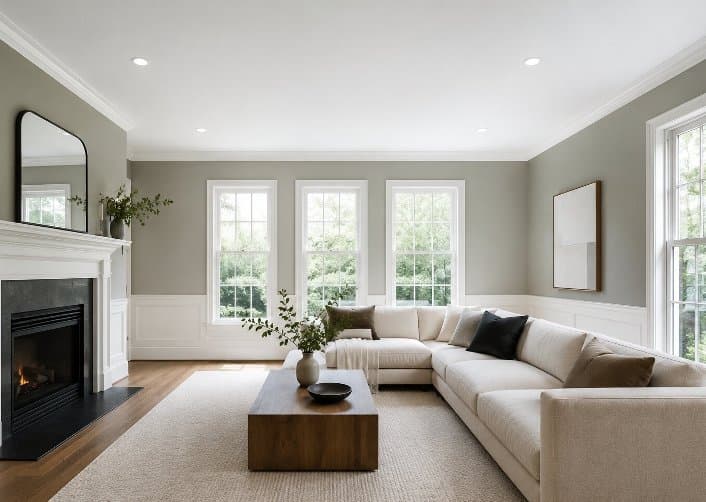
Paint the Ceiling a Bright, Reflective White
A true, untinted white on the ceiling bounces the most light back into a room, and that light bounce is what makes a ceiling feel farther away. Avoid a warm or creamy white, since a warmer tone absorbs more light and sits visually closer.
Pair the white ceiling with a lighter wall color when possible. Blurring the line between wall and ceiling removes the hard stop that tells the eye exactly where the room ends.
Use a Tone on Tone Gradient Instead of a Hard Contrast
If a stark white ceiling feels too plain for your style, try a gradient in the same color family as your walls.
For a cohesive look, use the full-strength color on the walls, a lighter version on the trim, and an even lighter, desaturated version on the ceiling. The gradual shift keeps the eye moving upward instead of stopping at a sharp line.
Keep the contrast subtle. If your walls are a deep navy, jumping straight to pale baby blue on the ceiling creates the same abrupt stop you were trying to avoid.
Carry the Wall Color Onto the Ceiling
Skipping crown molding and painting the ceiling the exact same color as the walls removes the visual seam most people associate with a low ceiling.
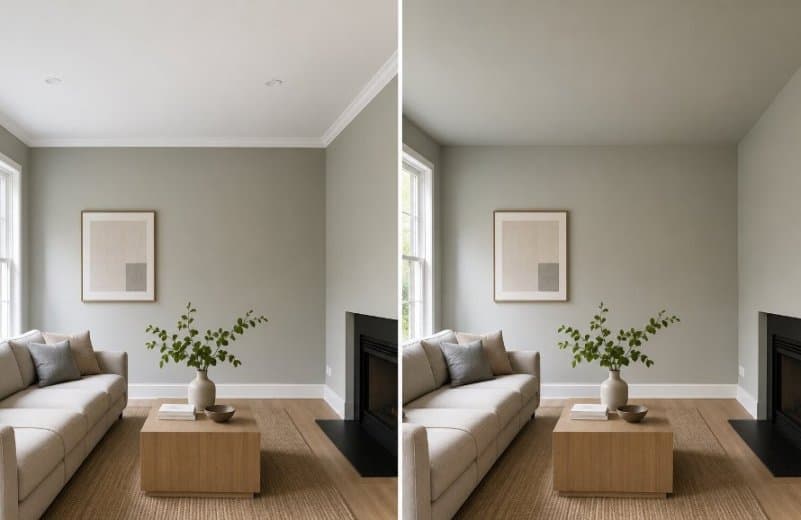
With no line to interrupt it, the eye reads the wall and ceiling as one continuous surface, which reads taller than two distinct planes.
This trick works especially well in small rooms with awkward angles, such as attic bedrooms or rooms with slanted ceilings, where trim would only add more visual clutter.
Add Vertical Stripes or Panelling
Vertical lines train the eye to travel up rather than sideways. Striped wallpaper, painted stripes, or vertical wood panelling all stretch a wall’s apparent height.
A tall, slim piece of art or a floor to ceiling bookshelf creates the same effect without a full repaint.
Keep the stripes subtle in color contrast. High contrast stripes can look busy in a small room, while soft, close toned stripes read as texture rather than pattern.
Hang Curtains as Close to the Ceiling as Possible
Mount curtain rods a few inches below the ceiling instead of directly above the window frame, and let the curtains fall all the way to the floor.
Covering the dead space between the window and the ceiling makes both the window and the room feel taller. A pelmet or simple valance can hide the extra hardware if the gap looks odd from below.
Choose Low Profile Lighting
Bulky pendant lights and flush mount fixtures with heavy shades add visual weight right where the ceiling is already closest to your head.
Swap them for recessed lighting, slim flush mounts, or fixtures with glass shades that let light pass through rather than blocking it.
Lamps placed on furniture also shift the light source down and away from the ceiling, which reduces the sense of a low overhead.
Use Mirrors to Bounce Light and Add Depth
A well placed mirror reflects window light and visually doubles the depth of a room, which softens the sense of a tight overhead space.
Position a mirror across from a window rather than facing a wall, since reflecting daylight has a much stronger effect than reflecting a lamp.
Restaurant designers have used this trick for years in small dining rooms, and it works the same way in a home living room or hallway.
Read Also: Tricks To Make The Ceiling Look Lower
Keep Furniture and Millwork Lower and Lighter
Tall, bulky furniture competes with a low ceiling for visual attention. Choosing lower profile sofas, chairs, and shelving keeps the eye focused near the floor, which leaves more visible wall space above and reads as more headroom.
If you already own floor to ceiling shelving or built ins, paint them the same tone as the trim and walls so they blend into the room rather than adding another hard edge near the ceiling line.
Blend Exposed Beams Into the Ceiling Color
Dark, exposed beams look striking in photos but they lower the perceived ceiling height in person.
Painting beams the same light color as the ceiling lets them recede instead of drawing a hard, dark line across the room. If you want to keep some contrast for character, a soft, light stain reads much taller than a dark stain or a painted black beam.
Conclusion
A low ceiling is a proportion problem, not a permanent limit on how a room feels.
Paint choices, light placement, and a few vertical elements can shift how tall a room reads without touching a single joist.
Start with the ceiling color, since it is the cheapest and fastest change, then layer in curtains, lighting, or a mirror based on which wall in the room needs the most help.