Wasps visit pools because open water is scarce and valuable to them, and a pool is the largest, easiest source in most backyards. They land at the edge to drink, and on hot days they also collect water to cool their nest.
Smell plays a bigger role than most pool owners expect. Wasps have a strong sense of smell, and chlorine or saltwater systems release odors that carry across a yard.
Sweet or fermented smells add to the pull. Soda cans, fruit, and food left on a table near the water read as a free meal.
Scent from people matters too. Floral shampoo, scented sunscreen, and perfume can draw wasps toward swimmers rather than the water itself.
Bright colored swimwear has the same effect, since wasps key in on colors that resemble flowers.
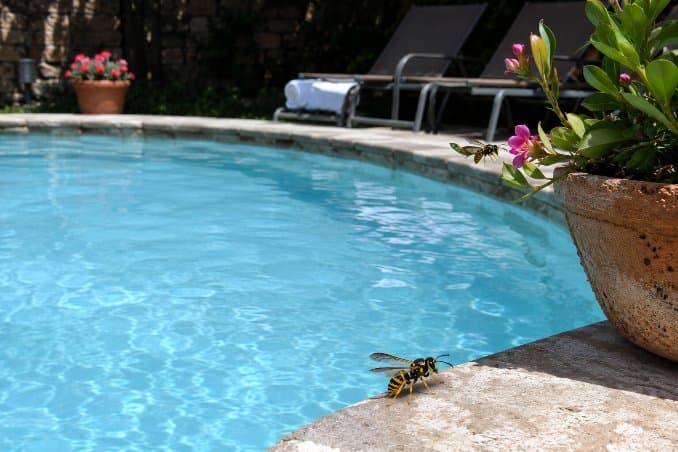
What Actually Attracts Wasps to the Pool Area?
Four factors drive most wasp activity around a pool, and they usually overlap rather than acting alone.
Open water is the biggest draw. A pool with no cover stays exposed all day, giving wasps constant access. Chemical odor from chlorine or salt systems adds a second layer, since the smell signals a water source from a distance.
Food and drink residue is the third factor. Wasps scavenge, and a barbecue, a spilled soda, or an unattended plate is an easy target.
The fourth factor is nesting proximity. Wasps often build nests close to the pool itself, including under the rail of an above ground pool or inside pergolas, fences, and umbrella poles near the deck.
Read Also: How to Keep Mosquitoes Away from Pool
How to Make Your Pool Less Appealing to Wasps
The most reliable fix is removing attractants in layers rather than relying on a single trick.
Cover the pool whenever it is not in use. A cover blocks access to open water and cuts wasp visits noticeably within days.
Clean up food and drink immediately. Seal soda cans, cover plates, and wipe down tables so sugary residue does not linger.
Switch to unscented sunscreen, soap, and shampoo before swimming. Floral or sweet scents on skin and hair are one of the easier attractants to remove entirely.
Check for standing water elsewhere in the yard, since planters, leaky hose bibs, and damp equipment pads can pull wasps toward the pool area even after the pool itself is covered.
Trim shrubs and flowering plants near the deck. Raspberry bushes, fennel, sunflowers, marigolds, and goldenrod are common wasp favorites, and moving them away from the water reduces overlap between feeding and drinking spots.
Using Traps Without Making the Problem Worse
Baited lure traps can reduce the number of wasps foraging near a pool, but placement decides whether they help or hurt.
Hang traps 15 to 20 feet away from seating and the water itself, not right next to it. This pulls wasps toward the trap instead of across the table where people are sitting.
Protein based bait works better in spring and early summer, while sweeter bait tends to perform better later in the season.
Set traps early, ideally in April or May, before colonies reach full size. Traps need to be emptied and refilled at least once a week to stay effective. Trapping queens in late winter or early spring can reduce the number of nests that form later in the year.
Dealing With a Nest Near the Pool
If wasps follow the same flight path to one spot over and over, a nest is likely nearby rather than a few insects just passing through for water.
Look under above ground pool rails, inside pergolas, along fence lines, and inside outdoor furniture, since these are common nesting spots close to a pool deck.
Do not spray a nest during the day. Locate it in daylight, then treat it at night when wasps are less active and less likely to sting the person doing the work.
Large or hard to reach nests are a job for a licensed pest control company, especially with an allergy in the household or a nest inside a wall cavity.
Removing a nest yourself carries real risk, since a disturbed colony can launch a coordinated defense using alarm pheromones that call in other wasps.
Conclusion
Most wasp activity around a pool traces back to a small set of causes: open water, chemical odor, food residue, and nearby nesting spots.
Covering the pool, cleaning up after meals, switching to unscented products, and placing traps well away from people handle the majority of cases without any spraying near the water.
When a nest is confirmed close to the pool deck, treating it at night or calling a licensed pest control company is the safer route over trying to remove it during the day.