Walking away from foundation issues means canceling a home purchase contract, or refusing to renovate a home you already own, because the cost, risk, or uncertainty of the foundation problem outweighs the value of keeping the deal alive. It is a financial decision as much as a structural one.
Most buyers do not walk away the moment they see a crack. Foundation problems are common, and many are fixable at a reasonable price.
The decision to walk away usually comes down to three questions. Can the cause of the damage actually be fixed? What will the fix cost compared to what the seller will give back? And can you still get financing if the foundation is not sound today?
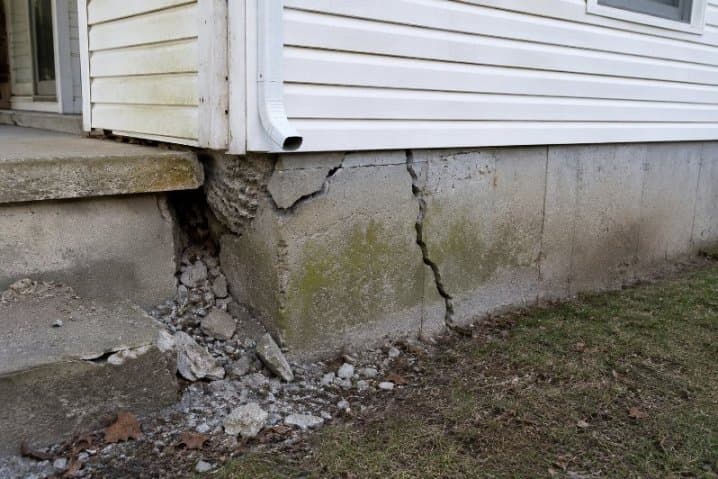
The Repair Cost Test: When the Numbers Do Not Work
The first and clearest reason to walk away is simple math. If the seller will not lower the price enough to cover repairs, and you cannot absorb the difference, the deal no longer makes sense.
Start with a structural engineer report, not just a home inspector’s opinion. A standalone structural engineer inspection costs about $300 to $800 on average, and can run past $1,200 for a full assessment of suspected damage like bowing walls or sagging floors. That report gives you a real repair estimate instead of a guess.
Compare that estimate to what is actually on the table. Minor crack repairs cost $250 to $800. Full foundation lifting or slab replacement can reach $20,000 to $30,000.
If the seller’s concession does not close that gap and you do not have the cash reserve to cover it, walking away protects you from buying a money pit.
The Financing Test: When Your Loan Will Not Close
A foundation problem can kill your mortgage before it kills your budget. FHA, VA, and USDA loans generally require the home to be structurally sound at the time of closing, and a lender can deny the loan outright if an active foundation issue shows up in the appraisal.
Conventional loans offer greater flexibility, but significant foundation problems can still lower a home’s appraised value or prompt the lender to require repairs before approving the loan.
If you are locked into an FHA or VA loan and the seller will not fix the foundation before closing, you may have no legal path to finish the purchase at all. That is a walk away situation regardless of how much you love the house.
The Recurrence Test: When the Cause Will Not Go Away
A repaired foundation is only a good investment if the underlying cause is actually solved. If the home sits on unstable soil, or has ongoing drainage problems that were never corrected, the same cracks and settling can come back within a few years.
Watch for these recurrence signals during your inspection period. A history of multiple failed repair attempts on the same section of foundation.
Standing water or poor grading around the home that has never been addressed. A location in a flood zone, sinkhole prone area, or known expansive clay soil region.
Any one of these on its own is a reason to ask harder questions. Two or more together are a strong signal to walk away.
Repair vs Walk Away Scenarios
| Situation | Typical Cost Range | Better Move |
|---|---|---|
| Single hairline crack, no shifting | $250 to $800 | Repair and proceed |
| Settling slab, seller offers full credit | $2,200 to $7,800 | Repair and proceed |
| Bowing walls, unstable soil confirmed | $10,000 to $30,000+ | Walk away |
| FHA or VA loan, active structural damage | Loan denial likely | Walk away |
| Multiple past repairs on same wall | Varies, often recurring | Walk away |
Read Also: Most Common First Home Buyers Mistakes
Frequently Asked Questions
Can I get my earnest money back if I walk away over foundation issues?
Yes, if your contract includes an inspection or appraisal contingency and you act before that deadline. Without a contingency, you risk losing your deposit.
Is a small foundation crack a deal breaker?
Usually not. Cracks under 1/8 inch that are not growing are often cosmetic. Cracks over 1/4 inch, especially horizontal or diagonal ones, warrant a structural engineer’s opinion.
Should I still buy a house with foundation issues if the price is right?
It can make sense if the seller’s price reduction fully covers verified repair costs, the cause has a clear fix, and your loan type allows it. Get the engineer’s report before you commit to that math.
What foundation issues almost always mean walking away?
Confirmed unstable or expansive soil with a history of recurring damage, multiple failed past repairs, and any issue that disqualifies you from your loan type are the strongest signals to walk away.
What happens if I ignore foundation issues and buy anyway?
The damage typically worsens over time, repair costs climb, and future buyers or their lenders will flag the same problem, hurting your resale value.
Conclusion
Foundation issues are not automatically a deal breaker, but they are also not something to negotiate on instinct.
The decision comes down to three checks: what the verified repair actually costs, whether your financing survives the damage, and whether the root cause will come back after you pay to fix it.
Get the engineer’s report, run the numbers against the seller’s offer, and confirm your loan can still close.
If any of those thee fail, walking away is the smarter and often cheaper choice.