Orange stains on concrete are caused by rust. Rust forms when iron meets water and oxygen, and that reaction is called oxidation. The orange color is iron oxide, and it soaks into the tiny pores of the concrete.
Common sources include metal furniture, garden tools, fence posts, and iron railings left sitting on a damp surface. Fertilizer is another common source, since many lawn fertilizers contain iron and other metals.
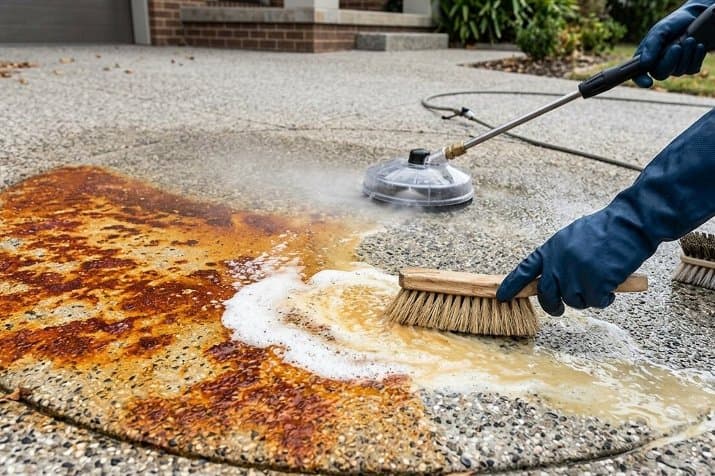
Sometimes the rust comes from inside the concrete itself. Steel rebar or wire mesh can rust if cracks let in air and moisture, and that rust works its way up to the surface.
Well water and irrigation water high in iron can also leave stains, even with no visible metal source nearby.
Why Rust Stains Are Harder to Remove Than Other Stains?
Rust stains are harder to remove because they are chemical, not physical. Dirt sits on top of concrete. Rust actually bonds with the surface once iron oxide forms inside the pores.
Pressure washing can clear away loose dirt and grime, but the water pressure does nothing to break that chemical bond. You need an acid that reacts with the iron oxide and loosens it before it can be scrubbed away.
The age of the stain matters too. A fresh, light orange stain from last week responds much faster than a stain that has been baking into the concrete for years.
How to Remove Light Rust Stains with Household Products?
Light rust stains often come out with simple household acids. Start by cleaning the area with dish soap and warm water.
This clears away dirt and grease that can block the acid from reaching the stain.
Once the surface is clean, pour undiluted lemon juice directly onto the stain. Let it sit for about fifteen minutes.
Scrub the spot with a stiff bristle brush, then rinse thoroughly with clean water.
If lemon juice is not strong enough, try white vinegar instead. Vinegar is more acidic, but it can also strip paint or a stained finish, so test it on a hidden spot first. Repeat the process if the stain is still visible after it dries.
Read Also: How To Remove stains and odors from carpets
How to Remove Deep or Old Rust Stains with Commercial Cleaners?
Deep or old rust stains usually need a commercial rust remover. These products contain stronger acids such as oxalic acid, phosphoric acid, or trisodium phosphate, and they dissolve iron oxide far more effectively than household items.
Follow these steps for commercial cleaners:
- Clear the area of furniture, tools, and debris.
- Wash the surface with soap and water, then let it dry.
- Test the cleaner on a small hidden section first.
- Apply the cleaner evenly with a sprayer or brush, following the label instructions.
- Let the product sit for the dwell time listed on the label, usually five to ten minutes.
- Scrub the area with a stiff bristle brush. Avoid wire brushes, since they can leave behind tiny metal particles that cause new rust spots.
- Rinse thoroughly with clean water until no residue remains.
- Repeat the process if the stain is still visible once the concrete dries.
Muriatic acid can also remove rust, but most guides advise against it for routine use.
It can etch the concrete, weaken the surface over time, and poses safety risks if handled incorrectly.
How to Stop Rust Stains from Coming Back?
Rust stains return when the source of the iron is never addressed. Cleaning the stain fixes the symptom, not the cause.
Start by identifying where the iron is coming from. Move metal furniture and tools off the concrete, or add rubber or plastic feet underneath them. Bring furniture inside during the off season if possible.
If the stains keep appearing with no clear metal source nearby, test your irrigation or well water for iron.
Iron levels as low as 0.3 milligrams per liter can cause staining over time with repeated exposure. Sealing the concrete with a quality penetrating sealer also makes it harder for future stains to soak in.
Comparing Rust Removal Methods for Concrete
| Method | Best For | Dwell Time | Notes |
|---|---|---|---|
| Dish soap and water | Pre cleaning before any treatment | None | Removes dirt so acid can reach the stain |
| Lemon juice | Fresh, light stains | About 15 minutes | Gentle option, safe for most surfaces |
| White vinegar | Light to moderate stains | About 15 minutes | Stronger than lemon juice, can strip paint |
| Oxalic acid cleaner | Moderate to heavy stains | 5 to 10 minutes | Sold at most hardware stores |
| Trisodium phosphate | Moderate to heavy stains | 5 to 10 minutes | Requires gloves and eye protection |
| Muriatic acid | Severe, deep set stains | Follow label exactly | Can etch concrete, use only as a last resort |