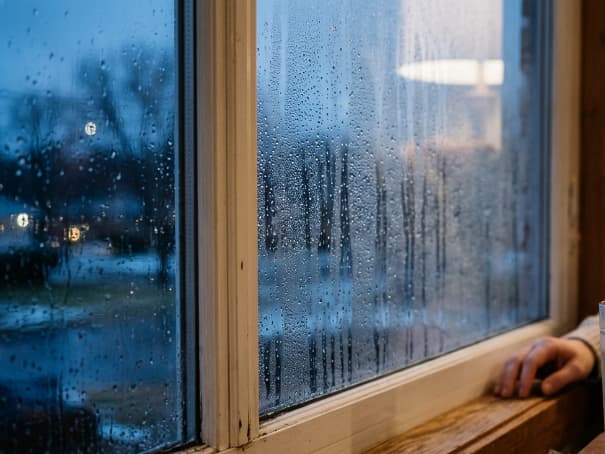
Window condensation forms when warm, humid air inside your home meets the cold surface of a window pane. The air cannot hold as much moisture at that cold surface, so the water turns into droplets on the glass. This is the same process that makes a cold glass of water “sweat” in summer.
In winter, this problem gets worse for two reasons. First, outdoor temperatures drop and make window glass much colder. Second, people seal their homes tightly to keep warm, which traps moisture indoors.
Activities like cooking, showering, breathing, and drying clothes all release water vapor into the air.
Single-pane windows are the most prone to winter condensation because the glass reaches near-outdoor temperatures. Double-glazed windows are better but can still show condensation if humidity inside your home is too high.
How to Stop Condensation on Windows in Winter: 7 Proven Methods
The most effective way to stop condensation on windows in winter is to reduce indoor humidity and raise the surface temperature of your glass.
You can do both at the same time by combining ventilation, heating, and window upgrades. The seven methods below work for renters and homeowners alike.
1. Use a Dehumidifier to Lower Indoor Humidity
A dehumidifier pulls excess moisture from the air. Set it to maintain indoor relative humidity (RH) between 40% and 50%.
At this range, the air holds far less moisture and condensation on cold glass drops significantly.
Place the dehumidifier in rooms where moisture is highest. Bedrooms, kitchens, and bathrooms are the main sources. Run it overnight if morning condensation on bedroom windows is a persistent problem.
2. Ventilate Your Home Daily to Release Trapped Moisture
Open at least two windows in different rooms for 10 to 15 minutes each morning. This cross-ventilation pushes moist air out and brings fresh, drier air in.
Cold outdoor air in winter actually carries very little moisture, so it helps lower your indoor humidity quickly.
If you cannot open windows due to weather or security, run an extractor fan in the kitchen and bathroom instead. These two rooms produce the most water vapor per day.
3. Keep Your Heating Consistent to Warm Up Window Glass
A cold window pane is the main trigger for condensation. Keeping your home at a steady temperature of 18 to 21 degrees Celsius prevents the glass surface from dropping low enough to cause moisture buildup.
Avoid turning heating off completely at night. A small drop in room temperature causes glass to cool fast, and that is when overnight condensation forms.
Use a thermostat timer to keep a low base temperature through the night, even if you lower it from daytime levels.
4. Install Window Insulation Film to Raise Glass Temperature
Window insulation film is a thin plastic layer that sticks to the inside of your window frame. It traps a layer of air between the film and the glass.
This air gap acts as insulation and raises the surface temperature on the room-facing side of the window, which stops condensation from forming.
Film kits cost between $10 and $30 per window. They are easy to apply with a hairdryer and remove cleanly at the end of winter. This is the best low-cost fix for renters who cannot change windows permanently.
5. Add Secondary Glazing to Improve Window Insulation
Secondary glazing is a second pane fitted on the room-side of an existing window.
Unlike window film, secondary glazing is a more permanent fix. It creates a wider air gap and raises the inner glass temperature more than film alone.
Secondary glazing reduces window heat loss by up to 60%. It also cuts noise and improves security.
A basic secondary glazing panel costs between $50 and $150 per window, depending on size and material.
6. Use Moisture-Absorbing Products in Problem Rooms
Moisture absorbers are small trays or hanging bags filled with calcium chloride crystals. They pull water vapor from the air passively, without needing electricity. Place them near windows, in wardrobes, or in corners where air circulation is low.
Brands like Unibond Aero 360 and DampRid are widely available and each unit absorbs between 500ml and 1,500ml of moisture before needing replacement. These work best as a supplement to ventilation, not as a standalone solution.
7. Dry Laundry Outside or Use a Tumble Dryer Vented Outdoors
Drying clothes indoors on a rack releases a large amount of moisture into the air. One load of wet laundry adds up to 2 liters of water vapor to a room.
This alone can push indoor humidity above 70%, far above the threshold where condensation on windows becomes unavoidable.
If you must dry clothes indoors, do it in a room with an open window or extractor fan running. A condenser tumble dryer or one vented directly outside removes the moisture from the building entirely.
Why Morning Condensation on Bedroom Windows is Worse Than in Other Rooms
Morning condensation on bedroom windows is worse because breathing during sleep releases a large amount of water vapor into a closed room overnight. Two people sleeping in a closed bedroom can add 1 to 1.5 liters of moisture to the air in a single night.
The bedroom window also cools through the night as outdoor temperatures drop. By morning, the glass is at its coldest point and the indoor air is at its most humid. This combination produces the most condensation in the house.
To reduce this, leave a bedroom window slightly open at night, or use a bedroom dehumidifier on a timer. Running it from midnight to 6am is enough to prevent buildup in most cases.
How to Stop Condensation on Double Glazed Windows in Winter
Double glazed windows can still show condensation on the inside if indoor humidity is too high.
Double glazing works by using two panes of glass with a sealed gap of inert gas between them. This raises the inner glass temperature compared to single glazing, but it does not make condensation impossible.
If you see condensation on the room-facing surface of your double glazed window, the cause is high indoor humidity, not a broken window. Follow the ventilation and dehumidifier steps above.
If you see condensation between the two panes of glass, the window seal has failed. The inert gas has leaked out and moist air has entered the gap.
This cannot be fixed by reducing indoor humidity. The window unit needs to be replaced by a glazier.
Read Also: How to Get Hard Water Stains Off Windows
How to Tell Where the Condensation Is
| Location of Condensation | Cause | Fix |
|---|---|---|
| Inside surface of glass (room side) | Indoor humidity too high | Ventilate, dehumidify |
| Between the two panes | Failed window seal | Replace the glass unit |
| Outside surface of glass (exterior) | Cold nights after warm days | Normal, no action needed |
What Happens If You Ignore Window Condensation in Winter
Ignoring condensation on windows in winter causes progressive damage to your home. Water that forms on glass runs down and pools on window sills and frames. Over weeks, this causes the following problems.
Wood window frames absorb moisture and begin to rot. Paint peels and filler cracks. Black mold (Cladosporium and Aspergillus species) grows on damp surfaces and spreads to nearby walls and curtains. Mold spores in the air trigger respiratory problems, especially in children and people with asthma.
Condensation also signals that your home has poor air quality overall. High indoor humidity at winter temperatures is a known risk factor for dust mite growth, which worsens allergies year-round.
How to Reduce Condensation on Windows Overnight
Use this routine every evening to prevent condensation from forming while you sleep.
- Open two windows in different rooms for 10 minutes before closing up for the night.
- Run the bathroom extractor fan for 20 minutes after the last shower of the day.
- Close kitchen doors while cooking and run the extractor fan above the hob.
- Place a moisture absorber on the bedroom window sill.
- Set your thermostat to hold a minimum of 16 degrees Celsius overnight.
- Leave bedroom doors slightly ajar to allow air circulation between rooms.
- Check window sills in the morning and wipe any residual moisture with a dry cloth.