Most buyers hear about a wood foundation late, often when an inspector mentions it after the offer is already accepted. The first reaction is usually worry, and some of that worry is fair. Wood buried in soil sounds like a bad idea, and a foundation is the one part of a house you cannot easily replace.
The short answer is that you can buy this house, but only with proof. A wood foundation that stays dry can carry a home for decades, and one that gets wet turns into an expensive repair. The difference comes down to water, and you can check for it before you commit.
You will find the exact checks below: how to confirm the foundation type, which red flags matter, what a repair can cost, and when to walk away.
What is a Wood Foundation and How Can You Tell If a House Has One?
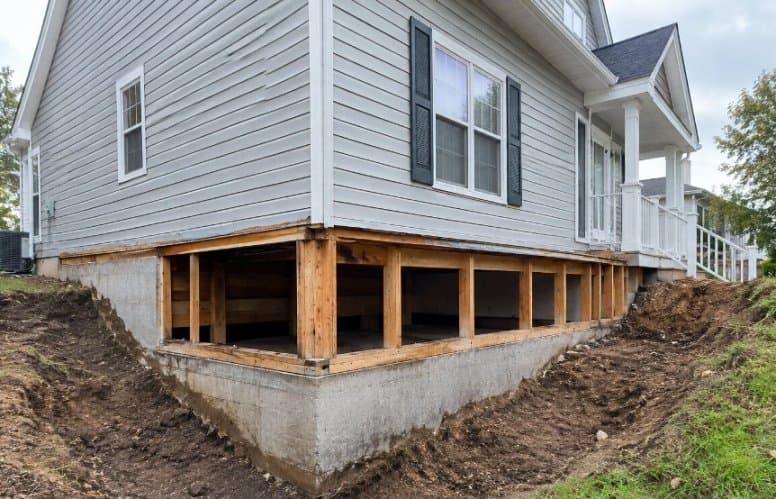
A wood foundation, also called a permanent wood foundation (PWF), is a foundation built from pressure treated lumber and plywood instead of poured concrete or block. Studs are framed into walls, covered with treated plywood, and set on a bed of gravel. Because there is no exposed concrete outside, many buyers never notice one.
The most reliable way to find out is to read the seller’s disclosure statement in full. From the outside, a wood foundation shows only wood, siding, or some other covering where you would normally see concrete.
If the basement is unfinished, you can see framed studs and plywood on the walls. If the basement is finished, you may not see anything at all, which is why the foundation type needs to be confirmed in writing.
Wood foundations come in two forms. A crawl space version is shallower and cheaper. A basement version goes deeper and is more common in cold regions such as Alaska, where sites are often remote.
Is It Safe to Buy a House With a Wood Foundation?
It is safe when the foundation is dry and was built to the published standard. The system was tested by the U.S. Forest Service, the American Wood Council, and The American Wood Protection Association, with field checks by The NAHB Research Foundation. The risk sits in the individual house, not the method.
Think of the foundation as a raincoat for the house. The plywood and plastic sheeting shed water, and the gravel bed and sump carry it away. If one layer fails, the wall stays wet, and wet wood is where rot and pests start.
Most wood foundations have water problems, and most are built improperly. Homeowners often report no water in the living space, because the water stays inside the wall. The only sign may be an earthy smell once baseboard trim is removed.
How Long Does a Wood Foundation Last?
Nobody knows exactly. The system dates to the early 1960s, so no wood foundation has run its full course yet.
Published estimates range from at least 50 years to 100 years, and the number depends heavily on how well the house keeps water away.
| Source | What it says about lifespan |
|---|---|
| National Research Council Canada, 1984 | Treatment should ensure a useful life of at least 50 years, and some data suggest longer |
| Arch Wood Protection, 2007 | 75 year limited warranty on its Wolmanized brand foundation lumber and plywood |
| Angi, 2026 | Estimates of 60 to 100 years, with most U.S. wood foundations no more than 40 to 50 years old |
The Arch warranty is worth a closer look. It covers damage from termites or fungal decay that makes the foundation structurally unfit, and it passes to later owners of the building.
The warranty applies only if the wood was treated to the American Wood Preservers’ Association standard and the foundation was built to the American Forest and Paper Association’s Technical Report 7. Ask the seller for the original builder’s paperwork and the treatment brand.
What Are the Red Flags on a Wood Foundation Inspection?
The biggest red flag is moisture in the wall. When finds moisture intrusion at a wood foundation, the water management system has failed and repairs will probably be expensive. Check the items below at every showing.
| Red flag | What it means |
|---|---|
| No gutters, or an incomplete system | Roof water lands next to the wall. This a huge red flag at a wood foundation |
| Short, missing, or disconnected downspout extensions | Water concentrates against the house in one spot |
| Soil that does not slope away | The grade should fall 5% for at least ten feet, and hard surfaces should slope away too |
| A sump basket that is closed at the bottom | The sump should be open at the bottom or perforated, and at least 30 inches deep |
| Exposed or torn polyethylene sheeting outside | The sheeting should be covered by a wood board, eight inches above grade and four inches below |
| Black stains on the wood behind insulation | The wall has been wet, and the water management system has failed |
A single missing downspout extension is a cheap fix. Stained wood behind insulation is a reason to bring in a structural engineer before you make an offer.
How Do You Inspect a House With a Wood Foundation Before Buying?
Hire an inspector who has worked on wood foundations and who is willing to check moisture at several points around the perimeter.
If walls are finished, ask the seller for permission to remove baseboard trim and drill small test holes. This is a prerequisite if ever buys such a home.
Use this order of operations:
- Read the seller disclosure and ask directly whether the home has a wood foundation.
- Ask the seller for the builder’s name, the permit records, and any treatment warranty papers.
- Hire an inspector with wood foundation experience, and confirm in advance that the inspection includes moisture readings at multiple points around the perimeter.
- Request an intrusive inspection, with trim removed and deep wall probes, if the walls are finished.
- Walk the exterior with the checklist in the table above, and photograph gutters, grading, and sheeting.
- Look for treatment stamps on exposed lumber. Treatment marks identify wood that was treated for foundation use, because the amount of preservative cannot be verified by eye.
- Bring in a licensed structural engineer if you find stained wood, bowed walls, or a wet sump.
Walls that bow inward are a separate warning. Wood flexes more than concrete under soil pressure, and calling a foundation repair company as soon as inward bowing appears.
How Much Does a Wood Foundation Cost to Build and Repair?
A wood foundation costs about $40,000 for a home with a 1,000 square foot footprint. That is more than a concrete basement of the same size in most places, except at remote sites where concrete delivery is expensive or impossible.
Wood foundation repairs as more expensive than concrete repairs. If your inspection finds moisture damage, get a written repair estimate and use it to negotiate a price cut or a seller credit.
Treat the cost as a pricing question. A dry, well drained wood foundation with warranty paperwork can be a fair purchase. A wet one should be priced as a repair project.
Will a Wood Foundation Affect Financing, Insurance, and Resale?
It can, and the answer depends on the lender and the insurer. Policies on wood foundations differ by company, so confirm each one in writing before you remove contingencies. Do not assume a lender or insurer will treat a wood foundation like concrete.
Ask these questions early:
- Will the lender approve a mortgage on a home with a wood foundation, and does the appraiser need any special documentation?
- Will the insurer cover the home at the same rate, and does the policy exclude rot or moisture damage to the foundation?
- Does the seller have a moisture inspection report you can hand to future buyers?
Resale is the quieter cost. Wood foundation durability as not yet well understood, so your future buyer will ask the same questions you are asking now. A clean moisture report and warranty papers make that sale easier.
Wood Foundation vs Concrete Foundation: How Do They Compare?
Concrete is the standard in most of the U.S. and more durable. A wood foundation is lighter, easier to insulate, and easier to finish, but it is more prone to rot and costs more to repair.
| Factor | Wood foundation | Concrete foundation |
|---|---|---|
| First used | 1960s | Thousands of years |
| Rot resistance | Prone to rotting | Resistant to rotting |
| Repair cost | Very expensive | More often affordable |
| Insulation | Can include insulation in the wall cavity | Can be insulated, but not as well |
| Finishing a basement | Easier | Harder |
| Best fit | Remote sites where concrete delivery is not possible | Most locations |
Wood foundation walls do not have the cracking problems of poured walls, which is a real advantage. The trade is that water must be controlled for the life of the house.
Buy or Walk Away: A Simple Decision Guide
Buy if the inspection shows dry wood, working drainage, and records of how the foundation was built.
Walk away, or renegotiate hard, if you find active moisture, stained framing, or a seller who cannot tell you who built it.
Buy if these are all true:
- Moisture readings are normal at every test point, including behind insulation.
- Gutters, downspout extensions, and grading all pass the checklist above.
- The seller can supply permits, builder details, or a treatment warranty.
- Your lender and insurer have confirmed coverage in writing.
Walk away or reprice if any of these are true:
- Wood behind the insulation is stained or wet.
- The walls are bowing inward.
- The sump is closed, clogged, or undersized.
- The seller refuses an intrusive inspection.
Conclusion
A house with a wood foundation is a reasonable purchase when the walls are dry, the drainage works, and the paperwork shows how the foundation was built.
It is a poor purchase when moisture is already inside the wall, because repairs cost more than they do for concrete.
Your next step is simple. Ask the seller to confirm the foundation type in writing, then book an inspector who has worked on wood foundations and will open a few wall sections.
If the readings are dry and the records are clear, you can buy with confidence. If you find stained framing, or the seller refuses testing, ask for a repair credit or walk away. Either way, you will decide with facts instead of a guess.