Condensation on a metal roof happens when warm, moist air inside a building meets the cold underside of the metal panels and turns into water droplets.
The fix comes down to three things working together: ventilation, insulation, and a vapor barrier. Skip one of these and moisture usually finds a way back in, even on a roof that looks well built.
Metal panels heat up and cool down fast because metal conducts temperature so efficiently, which is exactly why this problem shows up more often on metal roofs than on asphalt shingles. The good news is that most cases can be solved without tearing off the entire roof.
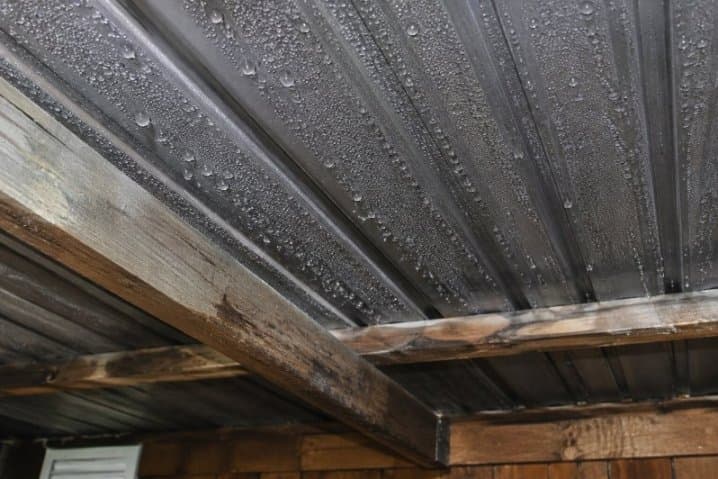
How to Confirm it is Condensation and Not a Leak
Before spending money on fixes, rule out an actual roof leak. Condensation shows a specific pattern that a leak does not.
- Drip marks appear only during temperature swings, usually clear cold nights followed by warmer mornings, not during or right after rain.
- Moisture shows up along purlins, screws, and low spots first, since these areas cool fastest.
- The underside of the panel feels completely dry a few hours after sunrise, once temperatures equalize.
- A leak, by contrast, tracks with rainfall and often follows a visible path from a specific penetration, seam, or fastener.
What Causes Condensation on a Metal Roof
Condensation happens when air holding moisture cools past its dew point and can no longer hold that moisture as vapor.
Metal is a highly conductive material, so the underside of a metal roof often sits well below the temperature of the air inside the building, especially overnight and in early morning. Warm air rises, reaches that cold metal surface, and releases its moisture as liquid.
A few conditions make this worse:
- A large temperature gap between the outside air and the inside of the structure.
- High humidity inside the building, common in bathrooms, kitchens, workshops, and barns.
- Little or no insulation between the living space and the roof deck.
- Poor or blocked ventilation that traps humid air instead of letting it escape.
Garages, workshops, and metal barns see this constantly because they often lack insulation entirely and generate a lot of moisture from vehicles, animals, or equipment.
Why Condensation is a Real Problem, Not Just an Annoyance
Left alone, condensation on a metal roof does more than drip on your head. Moisture buildup encourages rust on the underside of the panels, breaks down insulation, and creates the damp conditions mold needs to grow.
Wood decking and framing exposed to repeated moisture can rot over a few seasons, which turns a cheap fix into a structural repair.
Condensation also cuts into energy efficiency. Wet insulation loses much of its ability to block heat transfer, so your heating and cooling system works harder to keep up.
How to Stop Condensation on a Metal Roof
Fixing condensation almost always means addressing airflow, insulation, and moisture control together rather than picking just one.
The steps below start with the quickest fixes and move toward the more involved ones, so work through them in order and stop once the problem clears up.
Step 1: Improve Attic or Roof Cavity Ventilation
Add or clear intake vents at the eaves and exhaust vents at the ridge so air can flow continuously through the space under the roof.
This constant airflow carries humid air out before it has a chance to cool and condense on the metal. Check that existing vents are not blocked by insulation, debris, or paint.
Step 2: Add or Upgrade Insulation
Insulation keeps the underside of the metal closer to the temperature of the room below it, which reduces the temperature gap that causes condensation in the first place.
Closed cell spray foam is the strongest option because it resists moisture absorption. Open cell foam and fiberglass batts work too, but only when paired with a vapor barrier, since both can hold onto moisture over time.
Step 3: Install a Vapor Barrier
A vapor barrier is a sheet material, usually polyethylene or a foil faced product, installed on the warm side of the insulation.
It blocks humid indoor air from ever reaching the cold metal surface. In new construction, installers commonly place the vapor barrier on top of the roof decking, add purlins for an air gap, then attach the metal panels on top.
Step 4: Use a Condensation Control Underlayment
Products such as Dripstop or similar anti condensation membranes attach directly to the underside of the metal panels.
They hold small amounts of moisture in tiny pockets until the temperature rises above the dew point, then release that moisture as vapor so it never drips. This is a practical retrofit option when removing the roof is not realistic.
Step 5: Control Humidity at the Source
Reduce the amount of moisture entering the space in the first place.
Vent bathroom and kitchen fans directly outside rather than into the attic, fix plumbing leaks promptly, and consider a dehumidifier in workshops, garages, or barns with consistently high humidity.
Step 6: Add an Air Gap Above the Decking
For metal roofs installed over solid decking, adding purlins or battens creates a small air space between the vapor barrier and the metal panels.
This gap allows any residual moisture to ventilate out instead of sitting against the cold metal.
Comparison of Condensation Prevention Methods
Conclusion
Condensation on a metal roof almost always comes down to a gap between the temperature of the metal and the humidity of the air underneath it.
Start with ventilation since it is the cheapest and fastest fix, then layer in insulation, a vapor barrier, or an anti condensation underlayment depending on how the roof is built.
Address humidity at the source too, since even a perfectly insulated roof will struggle against a leaking pipe or an unvented bathroom fan.
Catching the problem early keeps it a maintenance task instead of a structural repair.